Massage for Neck and Shoulder Tension.
Neck and shoulder tension is the most common reason people book at G Spa Massage in Cypress. A focused 30-minute session ($50) works the tops of the shoulders, the sides of the neck and the upper back; a 60-minute session ($60) adds the rest of the body. Same-day slots are usually available, and we are open until midnight.
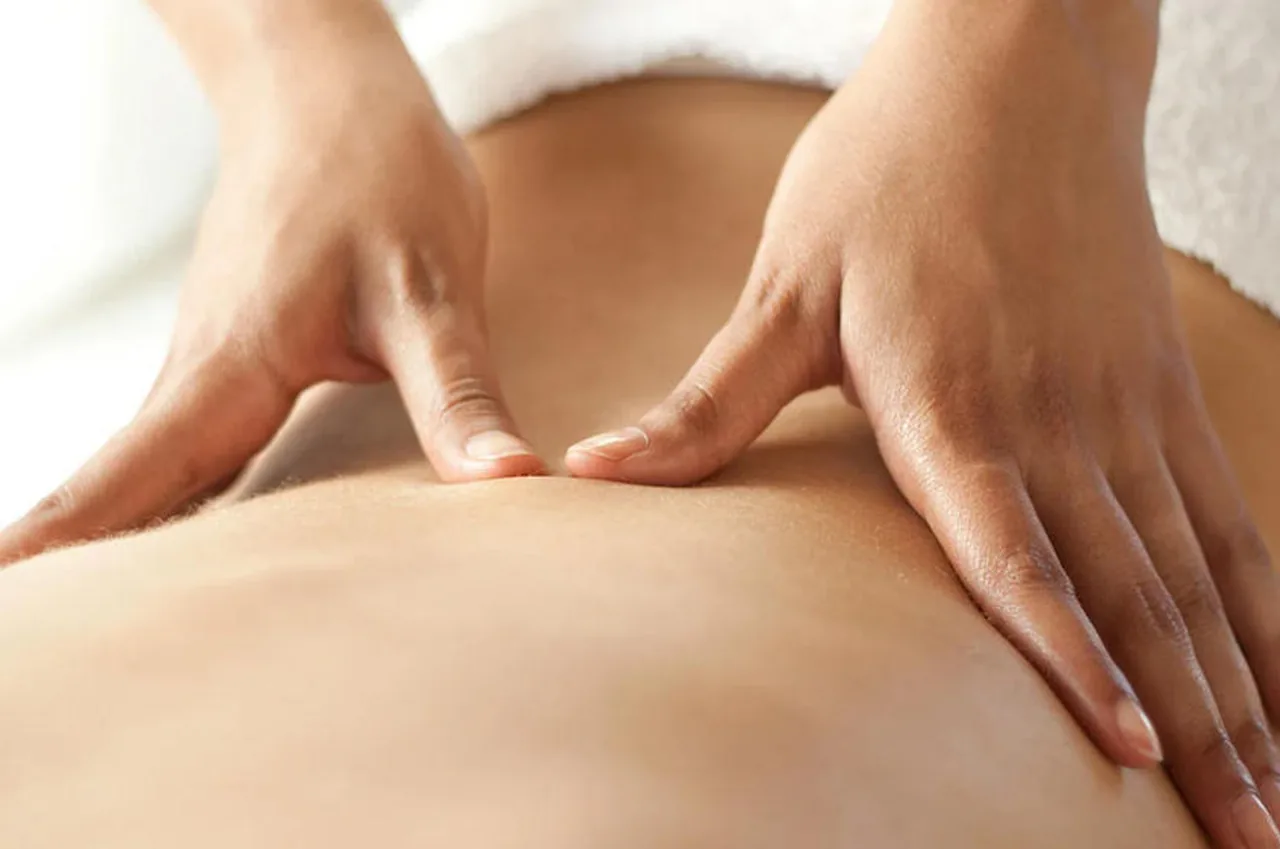
Massage for neck and shoulder tension works on the trapezius, the muscles between the shoulder blades and the sides of the neck: the spots that lock up after hours at a screen, a long nursing shift, or a slow crawl up US-290. At G Spa Massage on FM 529 in Cypress, ask for Stress Relief or Deep Tissue with a neck-and-shoulder focus. Thirty minutes is enough if it is only the neck; sixty if the upper back and shoulders are involved too. $50 for 30 minutes, $60 for 60, open 9 AM – Midnight, 7 days.
Where the tightness comes from
The trapezius runs from the base of the skull out across the tops of the shoulders and down the middle of the back. It holds your head up and your shoulders in place, and it works overtime whenever the head drifts forward, which is exactly what happens when you look at a laptop, a phone, a patient chart or a steering wheel for hours at a stretch.
Around Cypress that describes a lot of people. Oil-and-gas analysts on two monitors all day. Cy-Fair teachers bending over stacks of grading. Nurses at the hospitals along the Grand Parkway lifting, reaching and looking down through twelve-hour shifts. Commuters holding the wheel through stop-and-go traffic on 290 twice a day. By evening the shoulders have crept up toward the ears and they do not come back down on their own.
Two smaller muscles usually join in: the levator scapulae, which runs down the side of the neck to the top of the shoulder blade, and the rhomboids between the blades. When those tighten too, turning your head feels stiff and there is a familiar ache right where you cannot reach.
Stress plays its part as well. Under pressure, most people hold their shoulders slightly raised without noticing, and the muscle never gets the message to let go. A deadline week at an office near US-290 or a run of double shifts shows up in the neck as reliably as it shows up in sleep.
What a focused session covers
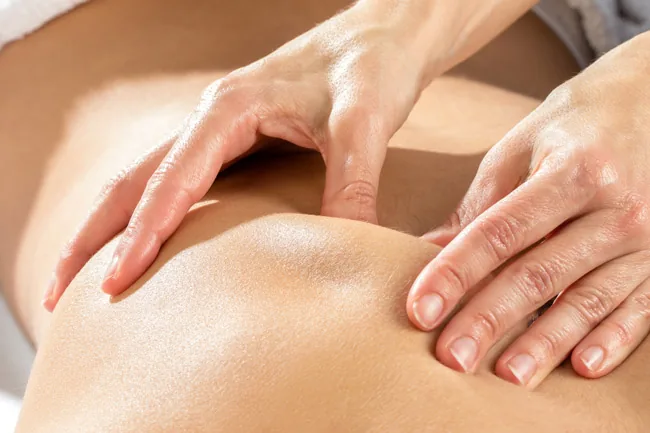
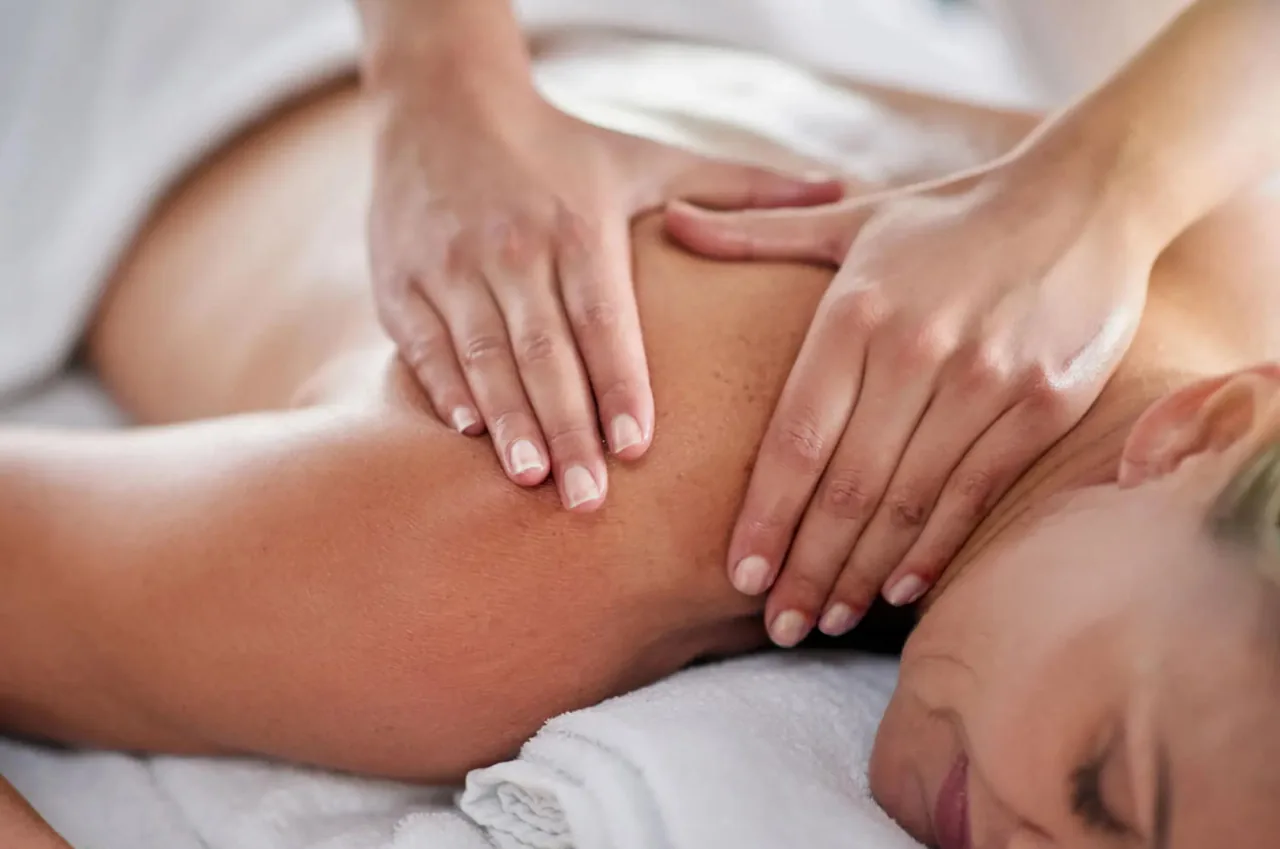
You lie face-down and the therapist starts with warming strokes across the whole upper back so the muscles are not shocked by pressure. Then the work narrows. One shoulder at a time, the therapist uses steady pressure along the top of the trapezius, pausing where it is tightest until the muscle starts to soften. The same happens on the other side.
Next is the neck: slow strokes from the base of the skull down to the shoulders, and careful pressure along the sides where the levator scapulae attaches. Then the upper back, working between the shoulder blades. If you prefer to be face-up for the neck portion, say so; some people find it easier to relax that way.
Pressure is your call. Stress Relief keeps it firm but moderate; Deep Tissue goes slower and deeper. Some guests want to feel the knot being worked and some want it gentler, and both are right. Tell the therapist which you are, and speak up if anything changes partway through.
The therapist will also pay attention to the muscles at the front of the shoulders and the top of the chest. When the head sits forward, those shorten and pull the shoulders inward, which keeps the trapezius stretched and tense. Loosening the front lets the back release, so a good neck session does not stay only behind you. If you spend most of the day looking down, mention it; extra time on the small muscles at the base of the skull, where headaches that start in the neck often begin, is easy to add.
Keeping it from coming back
A single session loosens things up; small habits keep them loose. Raise your screen so your eyes meet the top third of it rather than looking down. Every half hour, roll your shoulders backward a few times and let them drop. Hold your phone at chest height instead of in your lap. If you drive 290 or the Grand Parkway daily, adjust the seat so your shoulders rest against it rather than hunching toward the wheel.
Warmth helps too. A hot shower, or the free table shower before your session, gets the muscles ready for the work, and a warm compress at home in the evening keeps them from tightening overnight.
For people whose job means the tension will return, a 30-minute neck-and-shoulder session every few weeks is a simple maintenance plan. It takes about forty minutes door to door, it is $50, and because we are open until midnight it fits after a shift, after practice pick-up, or after the kids are asleep.
Sleep matters more than people expect. A pillow that is too high or too flat leaves the neck bent all night, undoing the work of the day. If you wake up stiff every morning regardless of how the day went, the pillow is worth a look before the next session.
Ready to book?
Text (713) 358-4494 and say "neck and shoulders" along with your name and a time. We will set up a Stress Relief or Deep Tissue session with that focus. Open 9 AM – Midnight, 7 days.
Try this at G Spa Massage.

Quick answers for this article.
Why do my shoulders tighten up so much?
Should I book 30 or 60 minutes?
Will it be painful?
Can I come in tonight?
Which massage is right for neck and shoulder tension?
Ready to try it for yourself?
Chat with us, call now, or get directions to G Spa Massage on FM 529.